 30+ years of experience
 +48 502 319 948
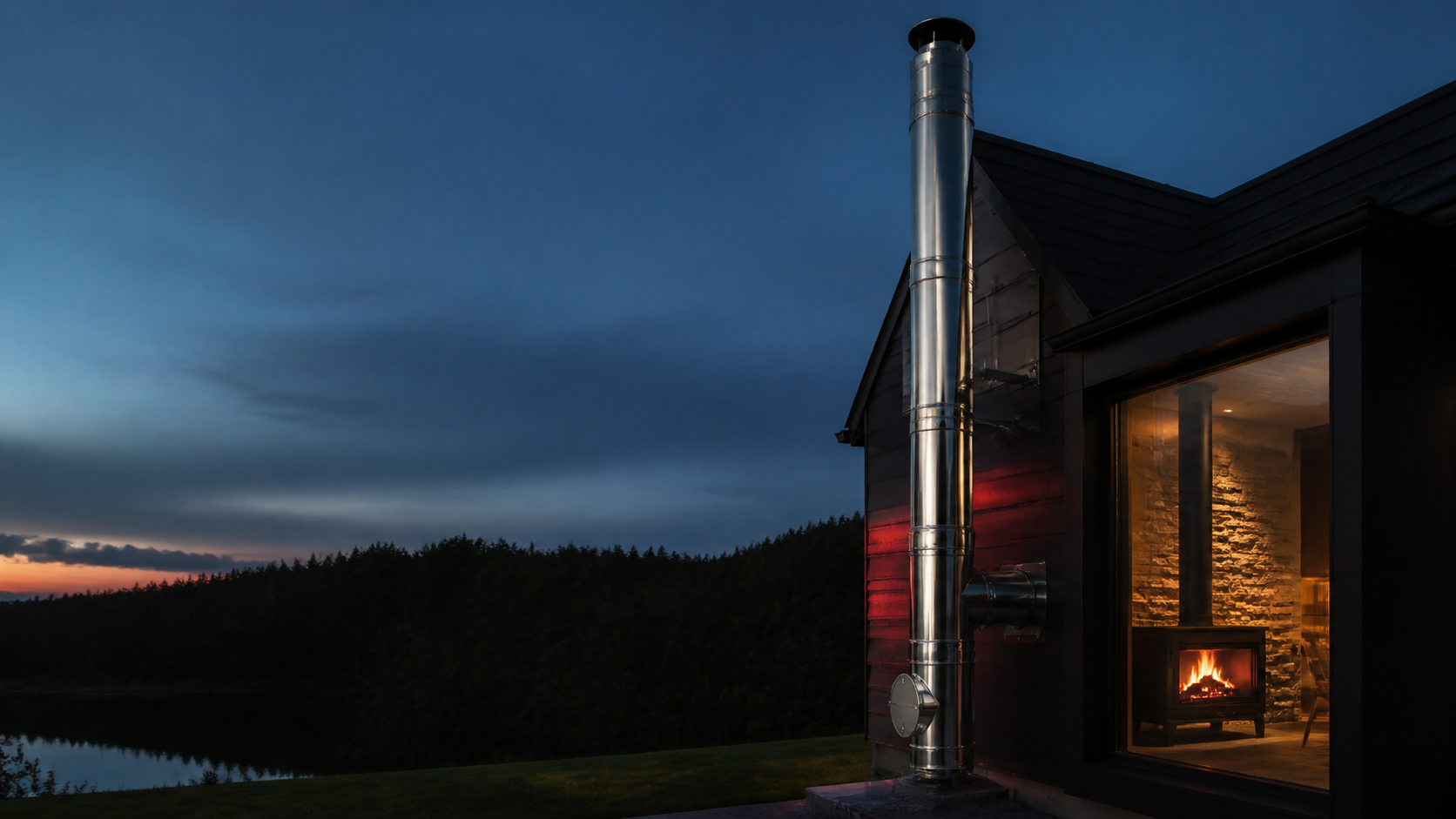
HEAT-RESISTANT CHIMNEY SYSTEMSBuilt for heat.
Built for heat.
Engineered for years.
HENITOM heat-resistant systems safely discharge high-temperature flue gases from solid-fuel appliances operating dry and under natural draught.
The right construction for the installation route
Both families use precisely formed, tightly joined modules. The difference is where the chimney is installed and whether it needs its own thermal envelope.
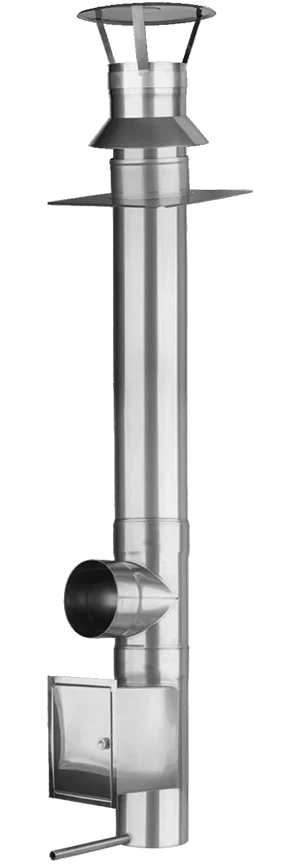
SKŻ
Single-wall circular system
A heat-resistant insert for internal ceramic or masonry chimney shafts and renovation of existing flues.
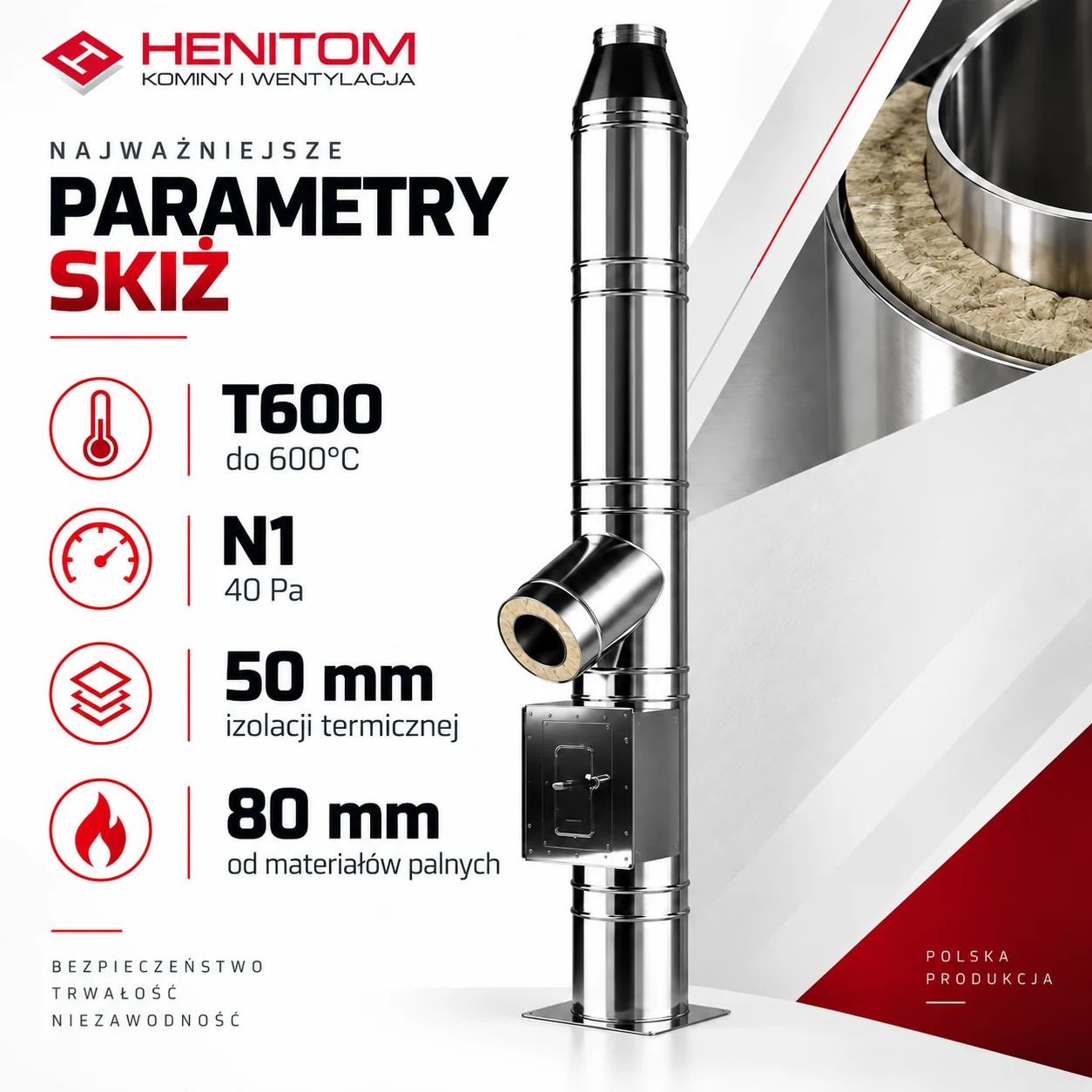
SKIŻ
Insulated double-wall system
A standalone external chimney for buildings without a suitable shaft or where the existing chimney cannot be used.
Reliability when flue-gas temperatures stay high
Temperature stability
Steel 1.4828 resists deformation during continuous operation up to 600°C.
Fast warm-up
Low thermal inertia supports quicker draught development after lighting the appliance.
Tight modular joints
Precisely formed groove-and-socket connections create a rigid, compatible system.
Certified safety
System families are designed to European EN 1856 requirements and carry CE documentation.
SYSTEM SELECTION
Start with the route, appliance and fuel
Final sizing should always be confirmed against the appliance data and the complete installation. These three questions determine the starting point:
Where will the chimney run?
Use SKŻ inside a suitable shaft. Choose insulated SKIŻ for an external or standalone route.
Which solid fuel is used?
Wood, coal, eco-fines, pellet and holzgas require the correct material thickness and operating classification.
What are the real operating conditions?
Check output, flue temperature, chimney height, diameter, draught and whether condensation can occur.
SOLID-FUEL APPLICATIONS
Made for dry, high-temperature operation
These systems are intended for dry operation without continuous condensation. The selected appliance and system configuration must be verified by a qualified designer or adviser.
- ◆Wood
- ◆Coal
- ◆Eco-fines
- ◆Pellet
- ◆Holzgas
TECHNICAL OVERVIEW
Important system parameters
- Operating mode
- Natural draught / negative pressure; dry flue-gas operation
- Maximum continuous temperature
- Up to 600°C
- SKŻ material
- Austenitic heat-resistant stainless steel 1.4828
- SKIŻ construction
- Inner 1.4828, outer 1.4301, 50 mm mineral wool
- Technology
- Precision laser cutting, butt welding, groove-and-socket joints
- Applications
- Residential, commercial and industrial solid-fuel installations
- Standards
- EN 1856-1:2009 and EN 1856-2:2009
- Finishes
- Selected powder-coated colours available
Frequently asked questions
When should I choose SKŻ?+
Choose the single-wall SKŻ family when a sound ceramic or masonry chimney shaft is available and needs a modern heat-resistant insert.
When is insulated SKIŻ the better option?+
SKIŻ is designed for an external or standalone chimney, especially where there is no usable shaft. Its 50 mm mineral-wool layer stabilises flue-gas conditions and limits heat loss.
Can these systems work with a condensing boiler?+
They are designed for dry, high-temperature solid-fuel operation. Condensing appliances require a correctly classified condensate-resistant system selected for the appliance.
How is the chimney diameter selected?+
Diameter depends on appliance output, outlet size, fuel, flue temperature, route and usable height. It should be calculated or confirmed from the complete project.
Do the systems require maintenance?+
Yes. A qualified professional should inspect and clean the chimney at intervals appropriate to the appliance, fuel and local requirements.
HIGH TEMPERATURES NEED THE RIGHT SYSTEM
Let us match the chimney to your appliance and installation route.
Send the appliance model, fuel, required height and a simple route sketch. Our technical team will recommend a safe starting configuration.